

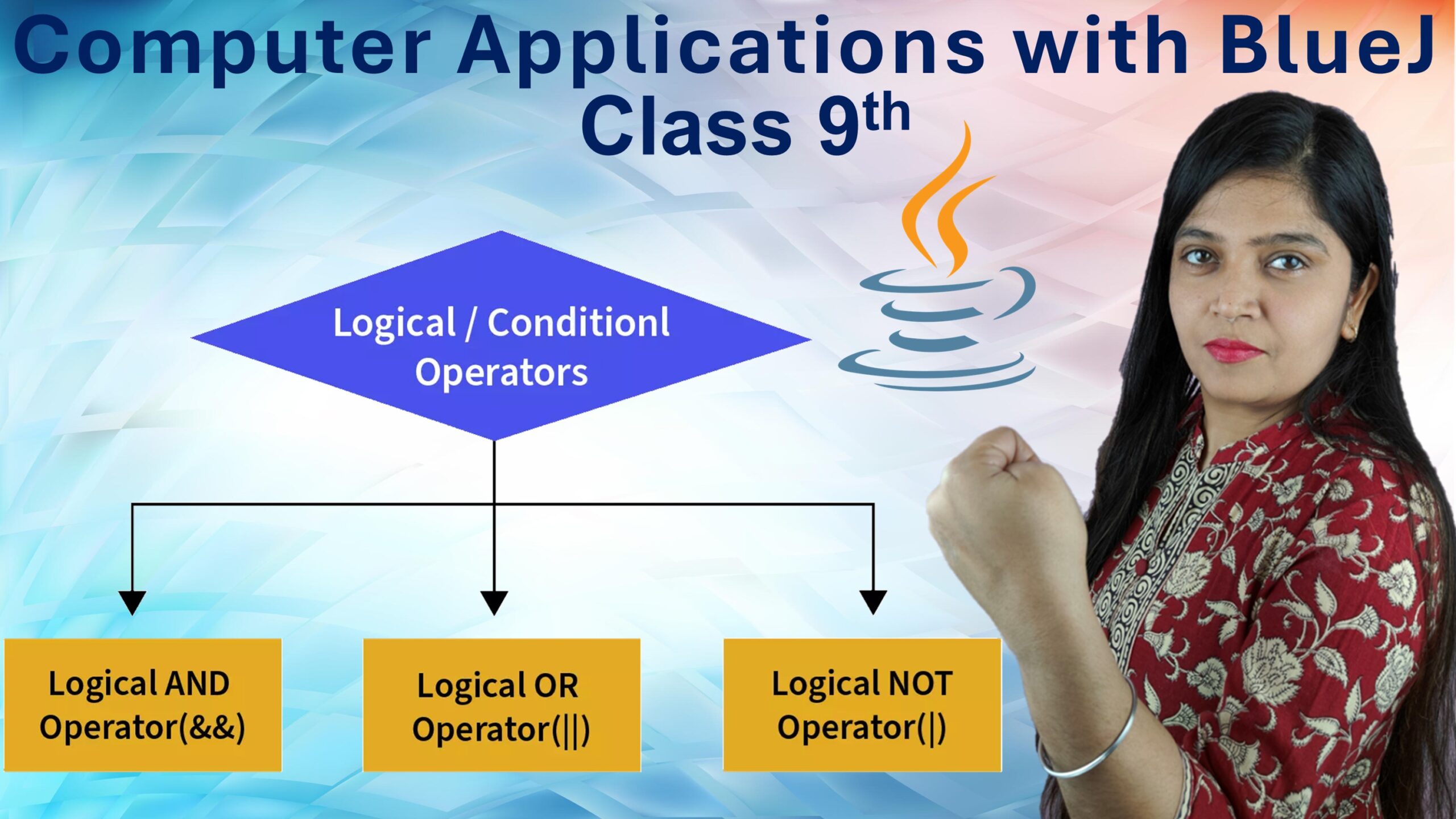
In our daily life, we often combine conditions before making a decision. For example ,we go outside if it’s not raining AND it’s not too hot.
This simple “and/or” logic is exactly what computers use in programming through logical operators. Just like we use logic in real life, Java uses logical operators to make decisions based on multiple conditions at once.
What Are Logical Operators?
Logical operators in Java are symbols that connect two or more conditions (or boolean expressions) and return a boolean result — either true or false. They are mostly used with conditional statements like if, while or for to control how the program flows. Example:
if (age > 18 && citizen == true)
System.out.println("Eligible to vote");
Here, both conditions must be true for the message to display.
Purpose of Logical Operators
The main purpose of logical operators is to combine or reverse conditions in a program. They help Java make smarter decisions based on multiple checks at once — just like we do before taking any real-life action. For example:
- Checking if a student passes both theory and practical exams.
- Verifying if a user’s input is not empty or null.
Why Logical Operators Matter in Java?
Logical operators are the heart of decision-making in Java. Without them, we could only test one condition at a time. They allow Java programs to handle complex logical expressions, making them intelligent and efficient in problem-solving.
Types of Logical Operators in Java
- AND Operator (&&)
- OR Operator (||)
- NOT Operator (!)
Logical Operators in Detail
1. AND (&&) Operator
Returns true only if both conditions are true. If any one condition is false, the result becomes false. Example:
if (marks > 50 && attendance > 75)
System.out.println("You passed!");
Both conditions must be true for the message to appear.
2. OR (||) Operator
Returns true if any one condition is true. Returns false only when both conditions are false. Example:
if (marks > 80 || grade.equals("A"))
System.out.println("Excellent performance!");
The message appears if either the marks are high or the grade is ‘A’.
3. NOT (!) Operator
Used to reverse the logical result. If the condition is true, it becomes false and vice versa. Example:
if (!(age < 18))
System.out.println("You are an adult.");
The NOT operator makes the condition opposite in meaning.
Precedence and Associativity of Logical Operators
When multiple operators appear together, Java decides their execution order using precedence.
1. Precedence (High → Low)
- ! (NOT)
- && (AND)
- || (OR)
2. Associativity:
All logical operators have left-to-right associativity, except !, which is right-to-left. Example:
boolean result = true || false && !false;
// Step 1: !false → true
// Step 2: false && true → false
// Step 3: true || false → true
Final result: trueFinal Thought
Logical operators in Java make decision-making smarter and more flexible. They allow programs to evaluate multiple conditions at once, just like how we think logically in daily life. Without them, Java wouldn’t be able to reason and reasoning is what makes code truly intelligent!
If you’re thinking of learning programming, Java is a great place to start!
Leave a Comment